
Adagio Hammerklavier (1973) marks the period in which Hans van Manen started to use classical pointework more often, and in this ‘timeless classic of twentieth-century dance’ he did so in a way that was exceptionally lyrical for him.
As usual, Van Manen took his inspiration from the music; in this case, Christoph Eschenbach’s unusually slow performance of the adagio from Beethoven’s Piano Sonata no. 29 in B-flat major. The master choreographer was inspired to carry out a deep investigation into just how slow a movement can be. He once described the result as, “a wheel that is still just moving after a push, just before it falls.”
Adagio Hammerklavier Excerpt
From the Stage
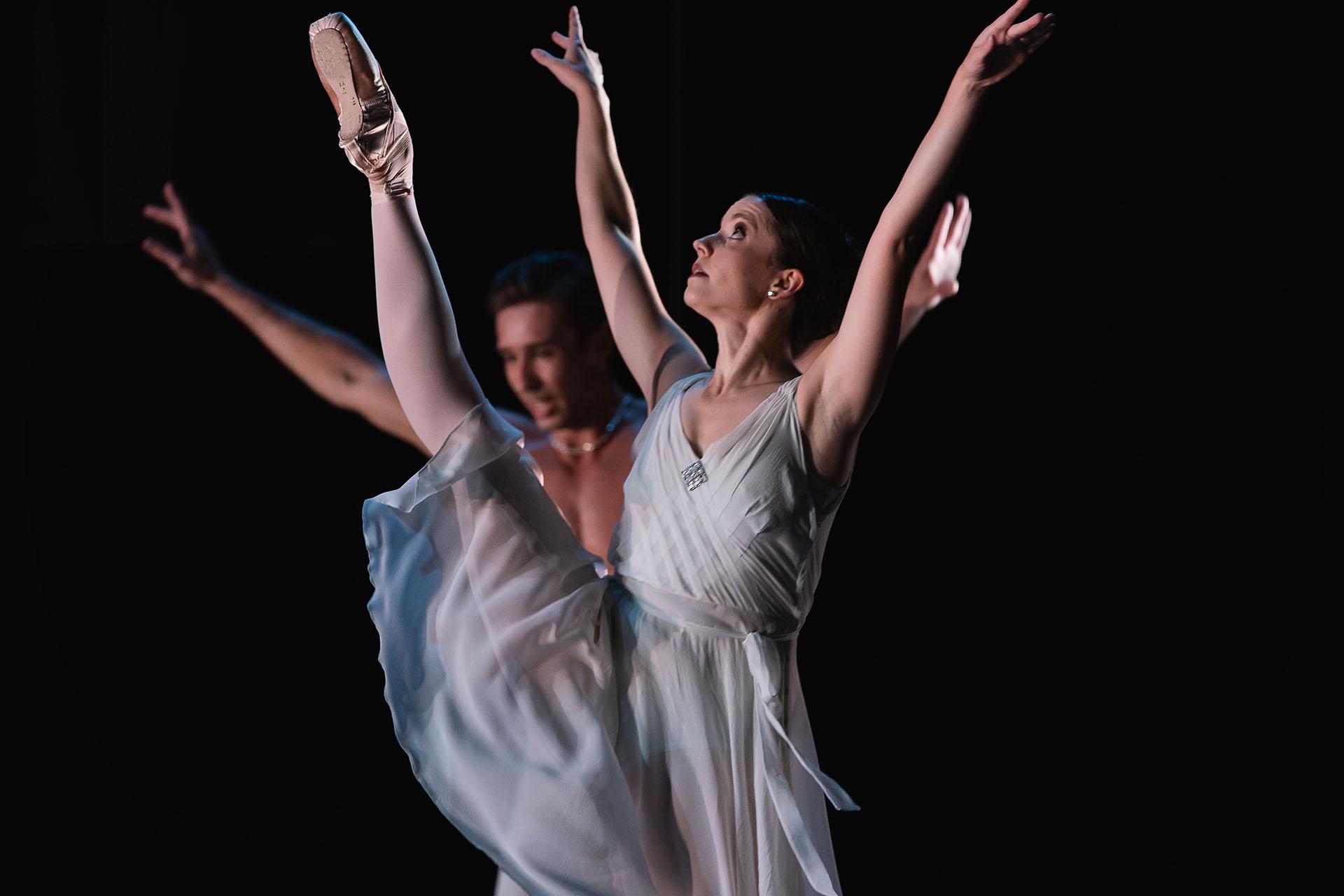
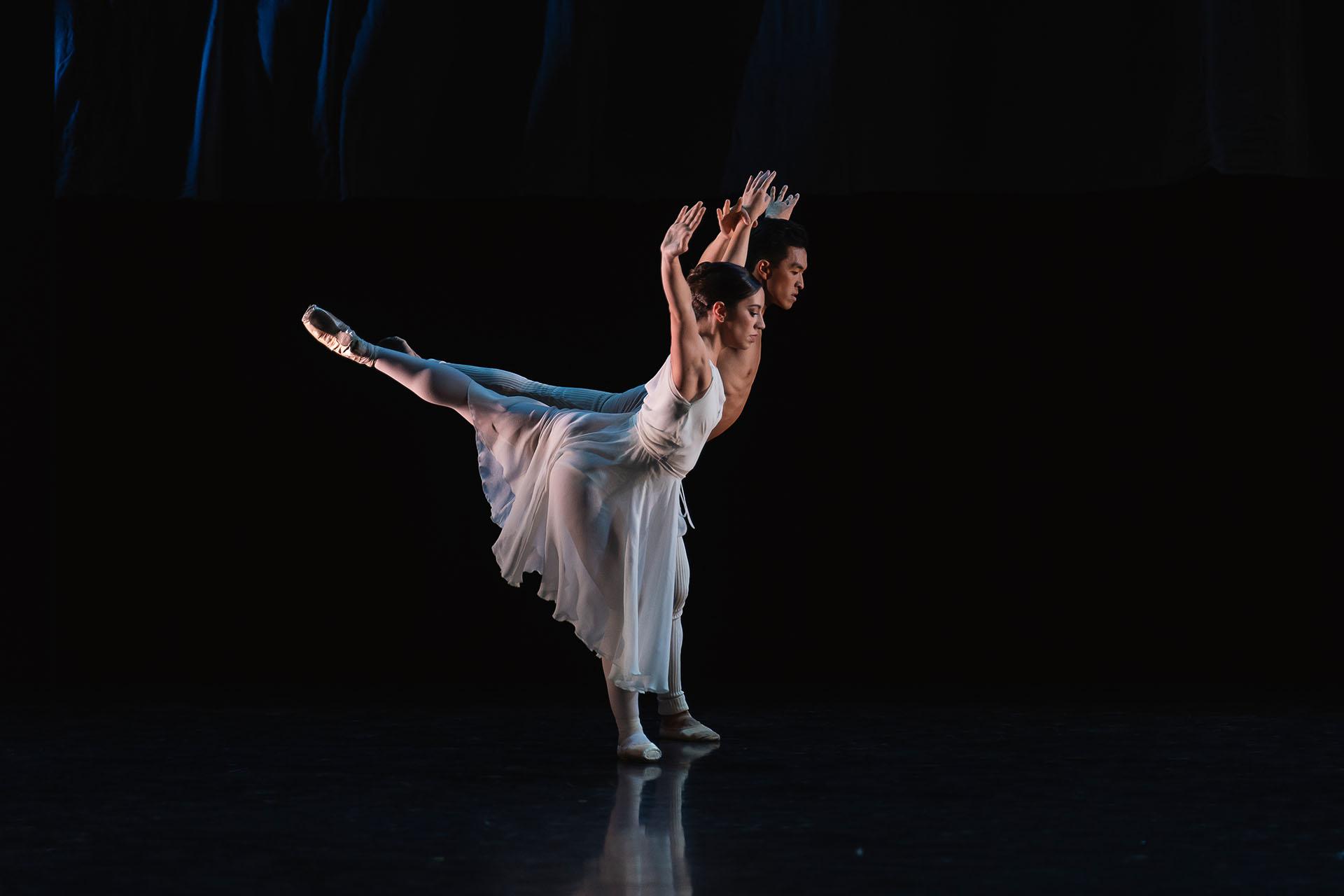
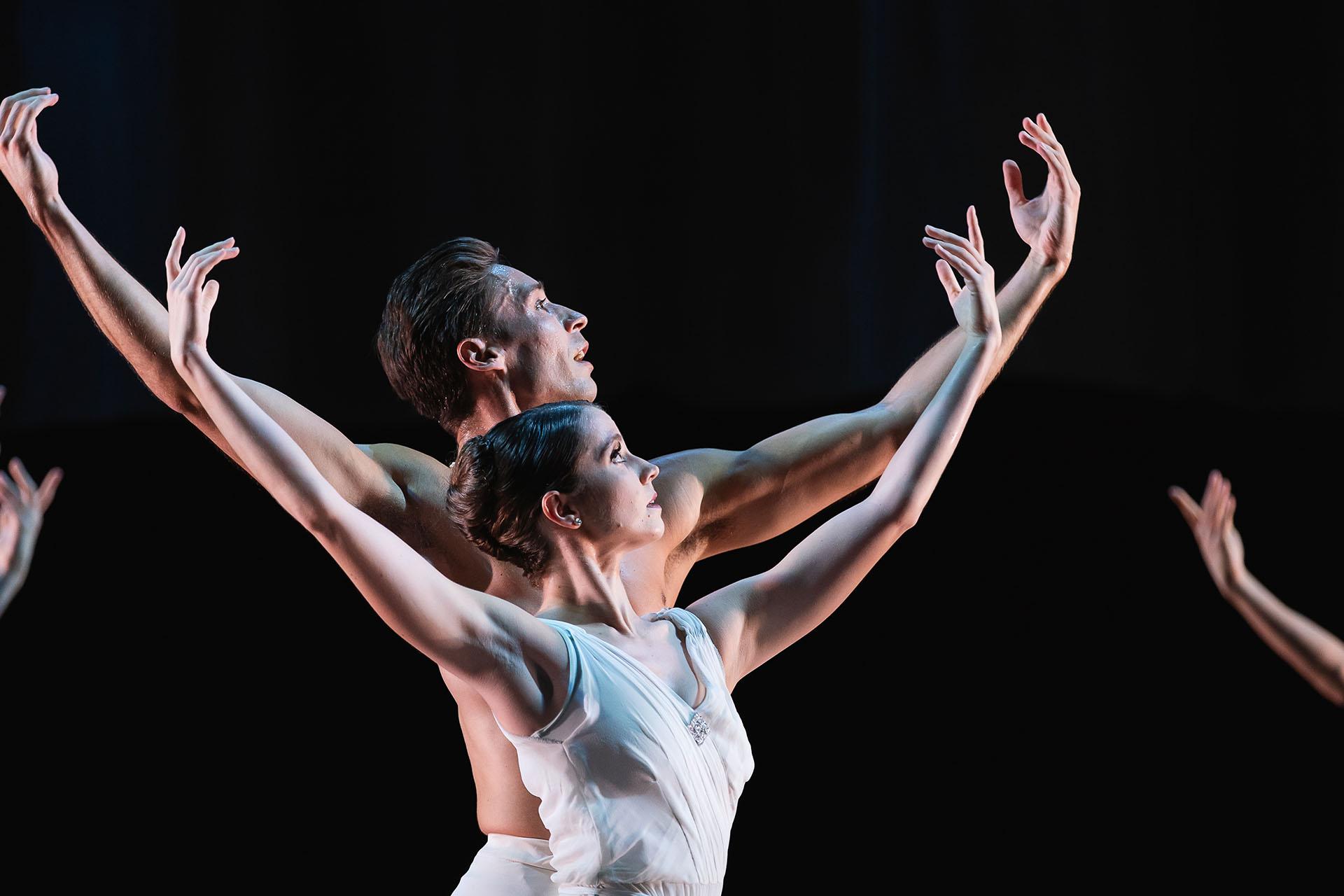
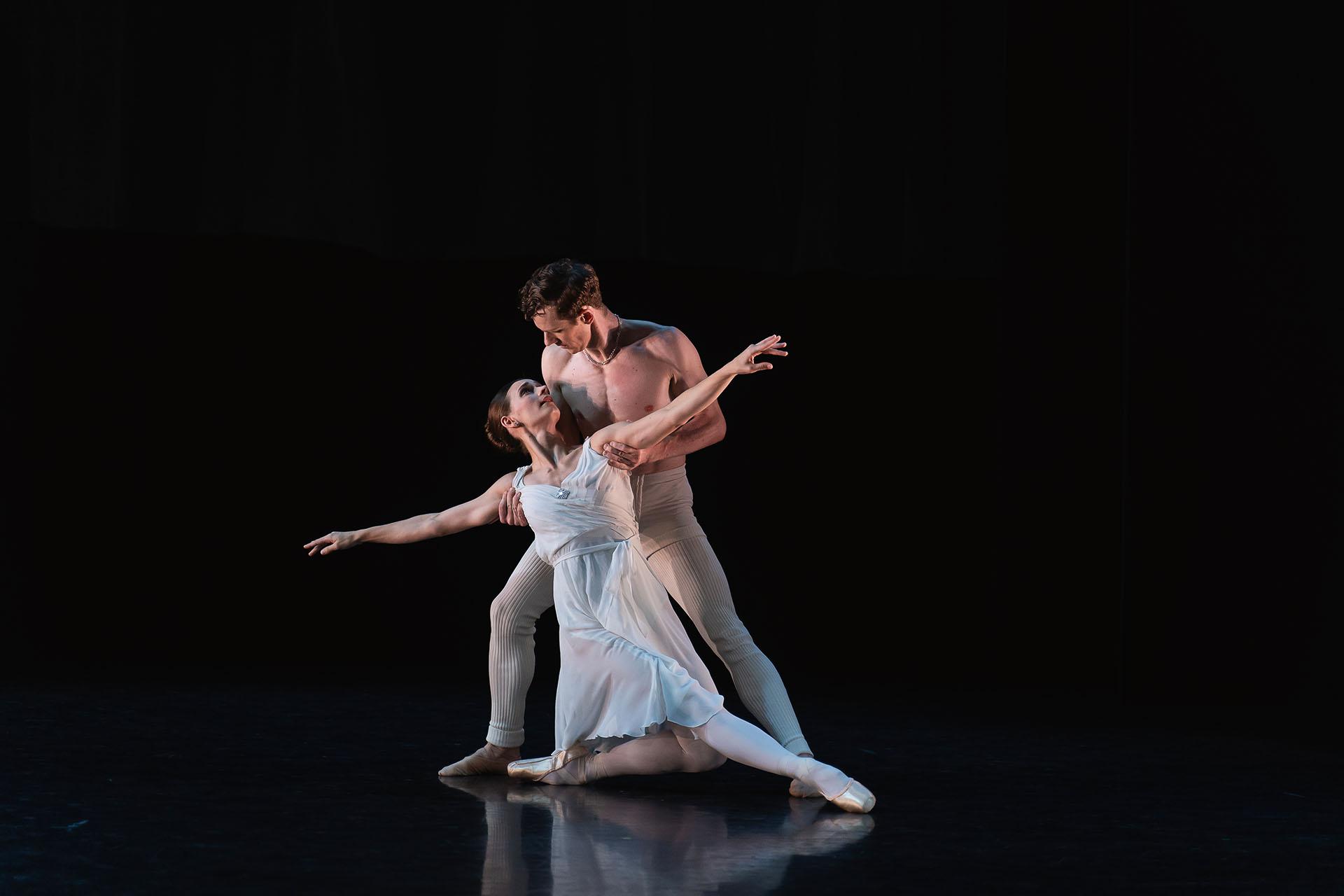
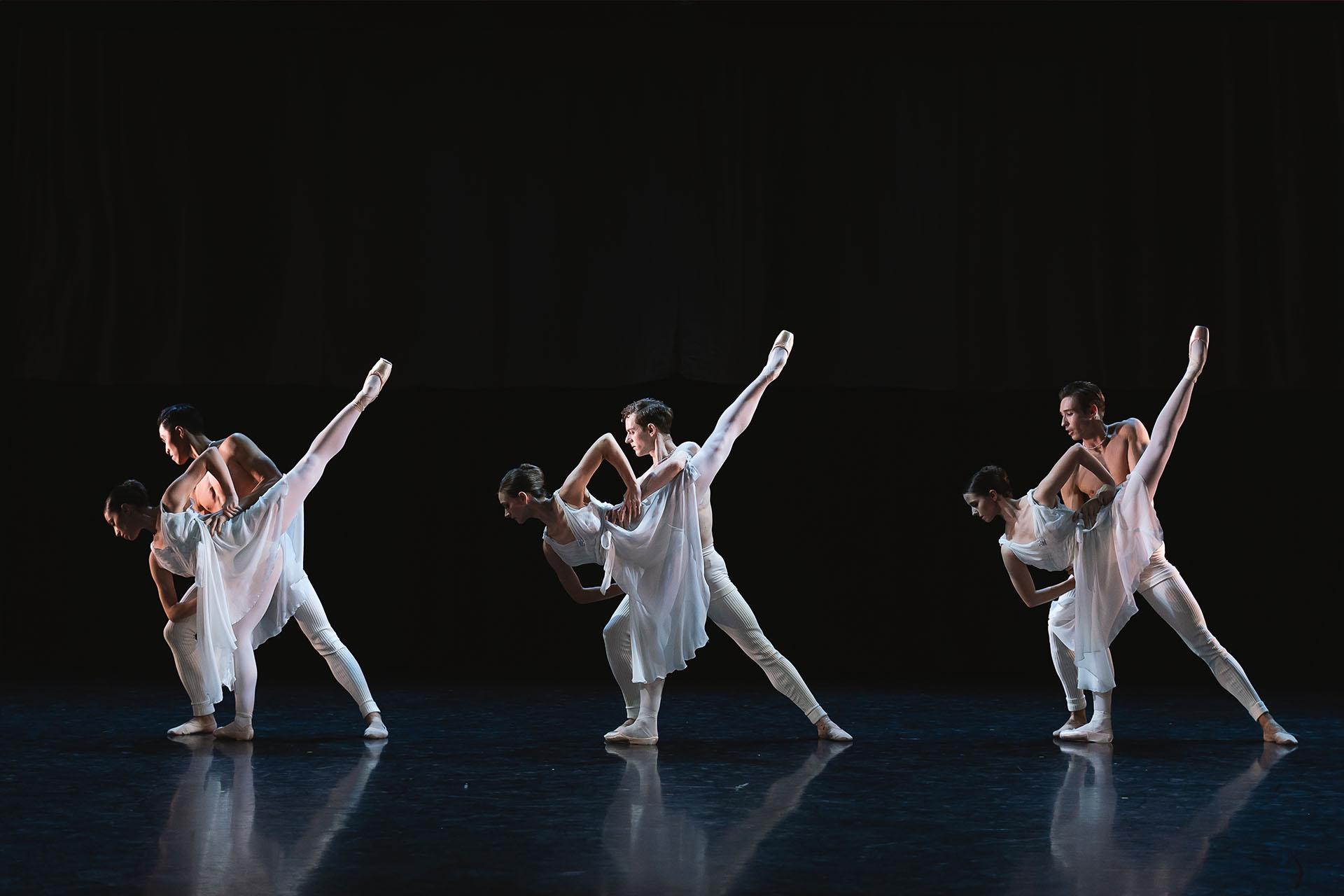
Production photos featuring dancers Joseph Taylor, Dominique Larose, Alessandra Bramante, George Liang, Amber Lewis, and Jonathan Hanks. All taken by Emily Nuttall.
From the Rehearsal Room
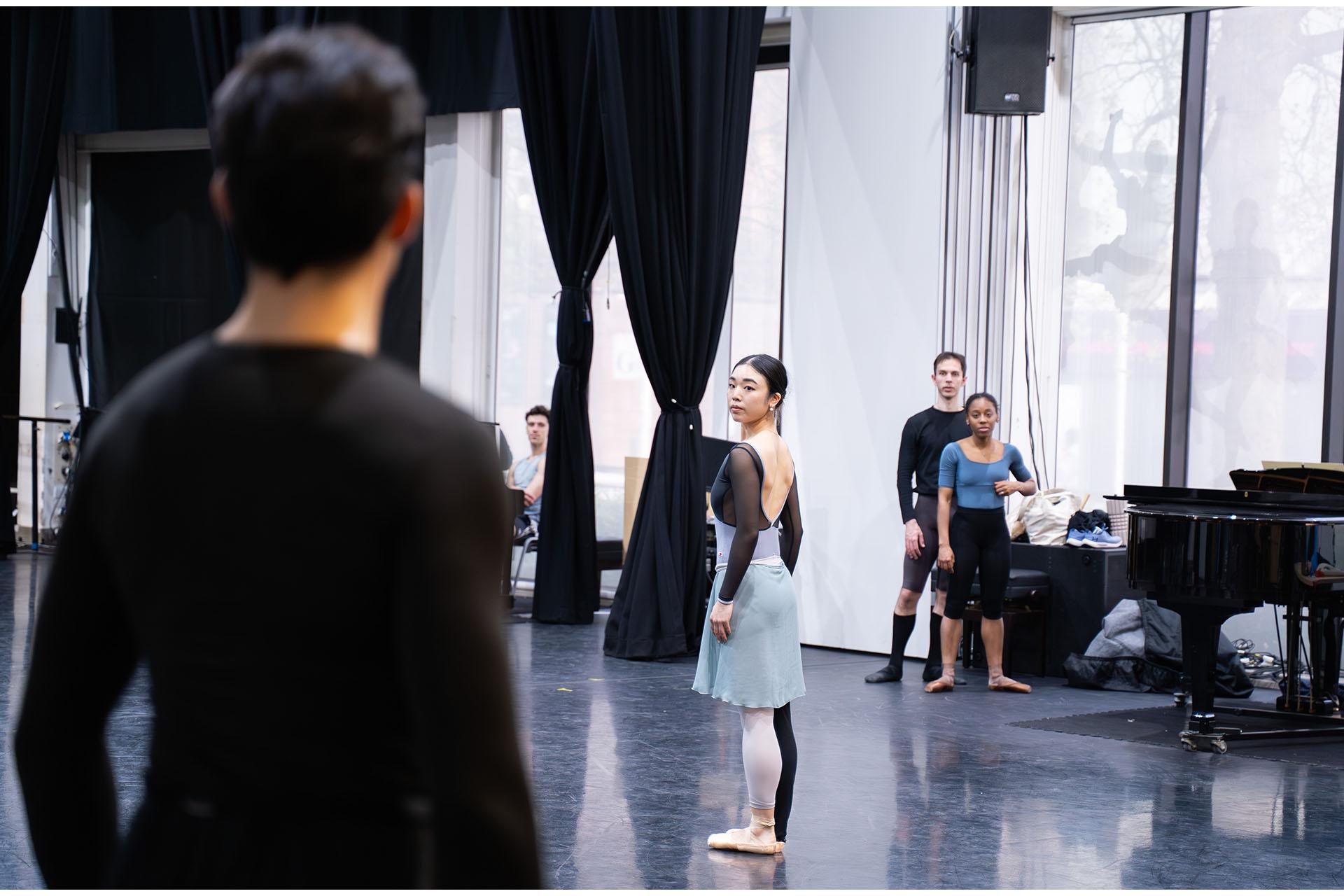
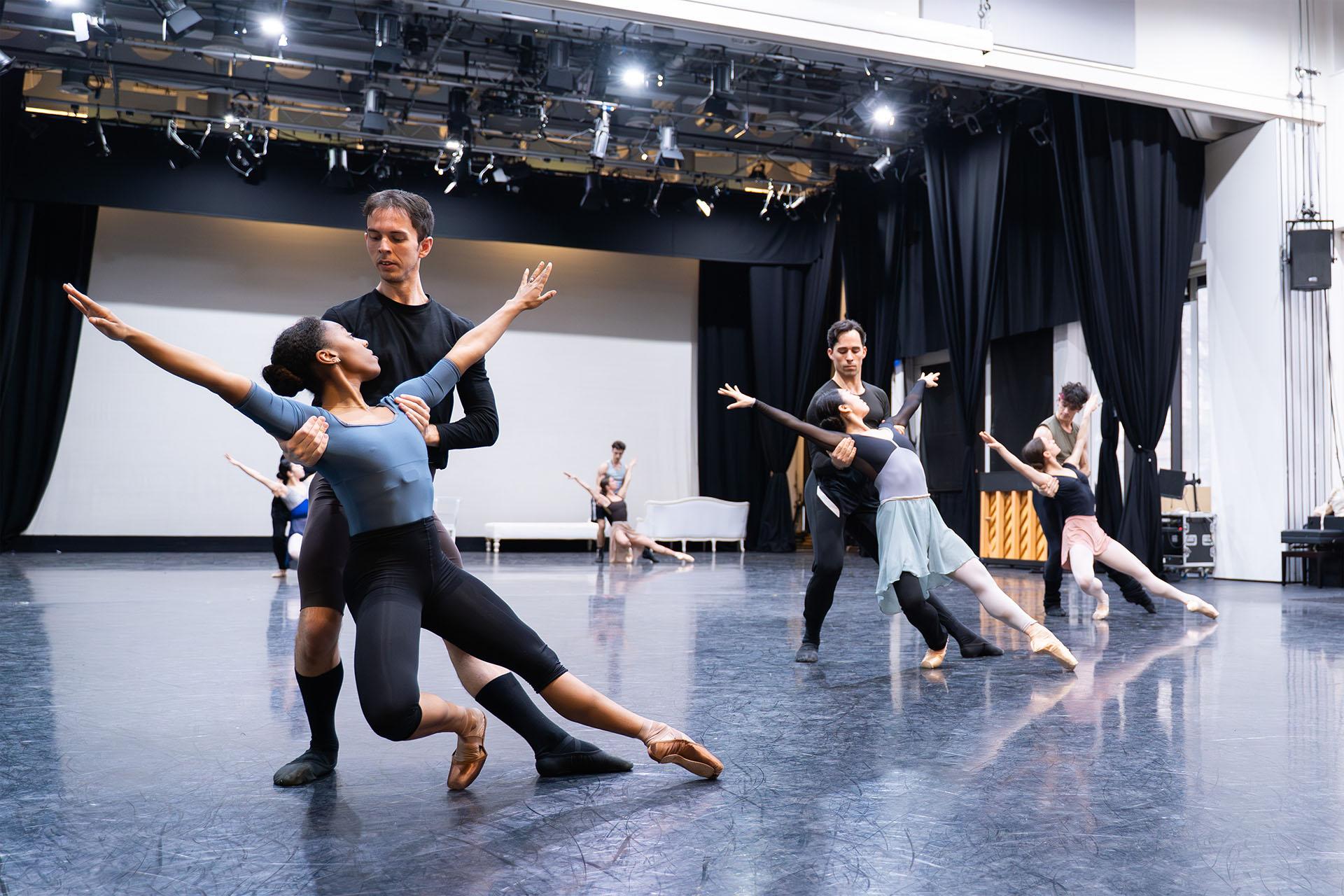
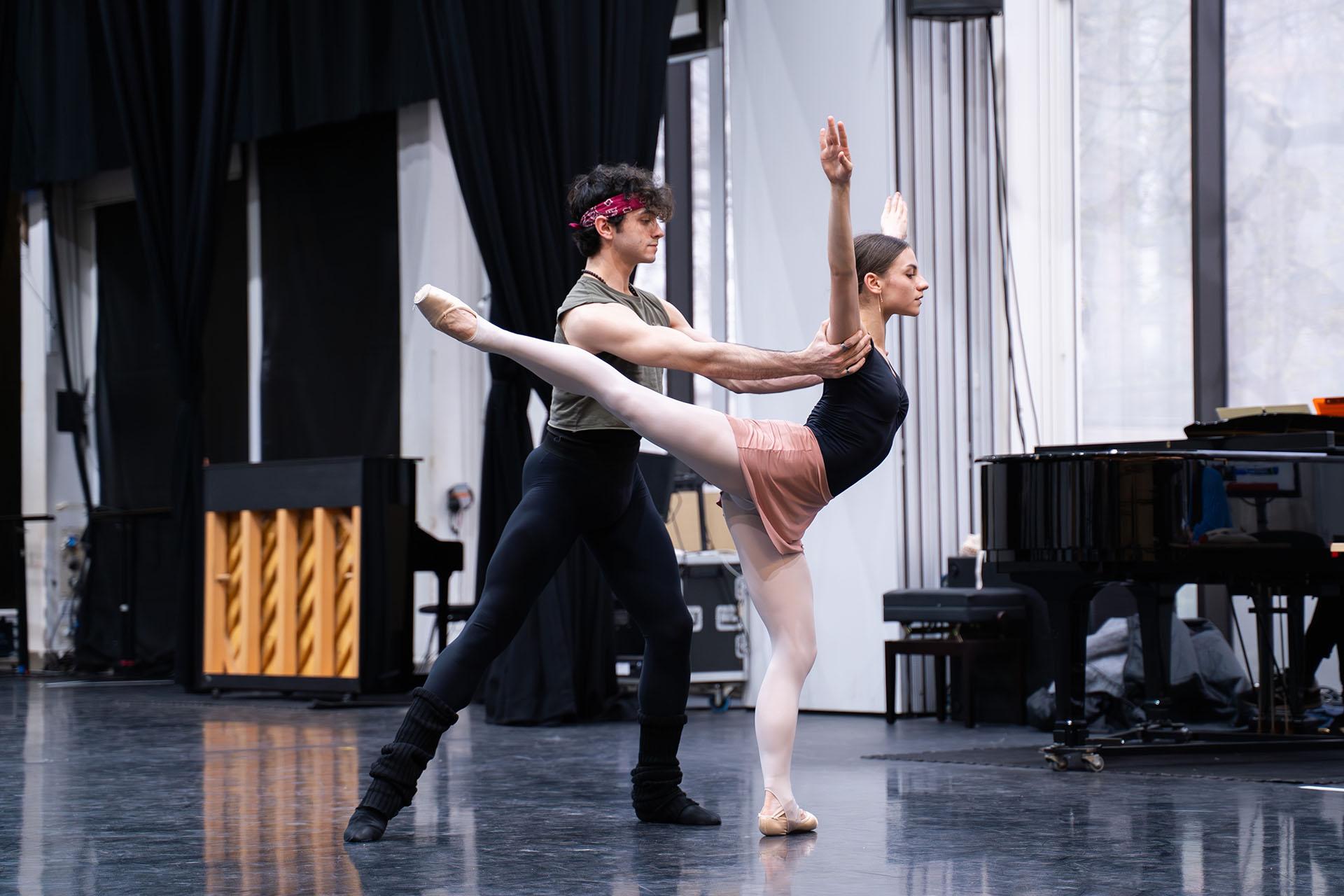
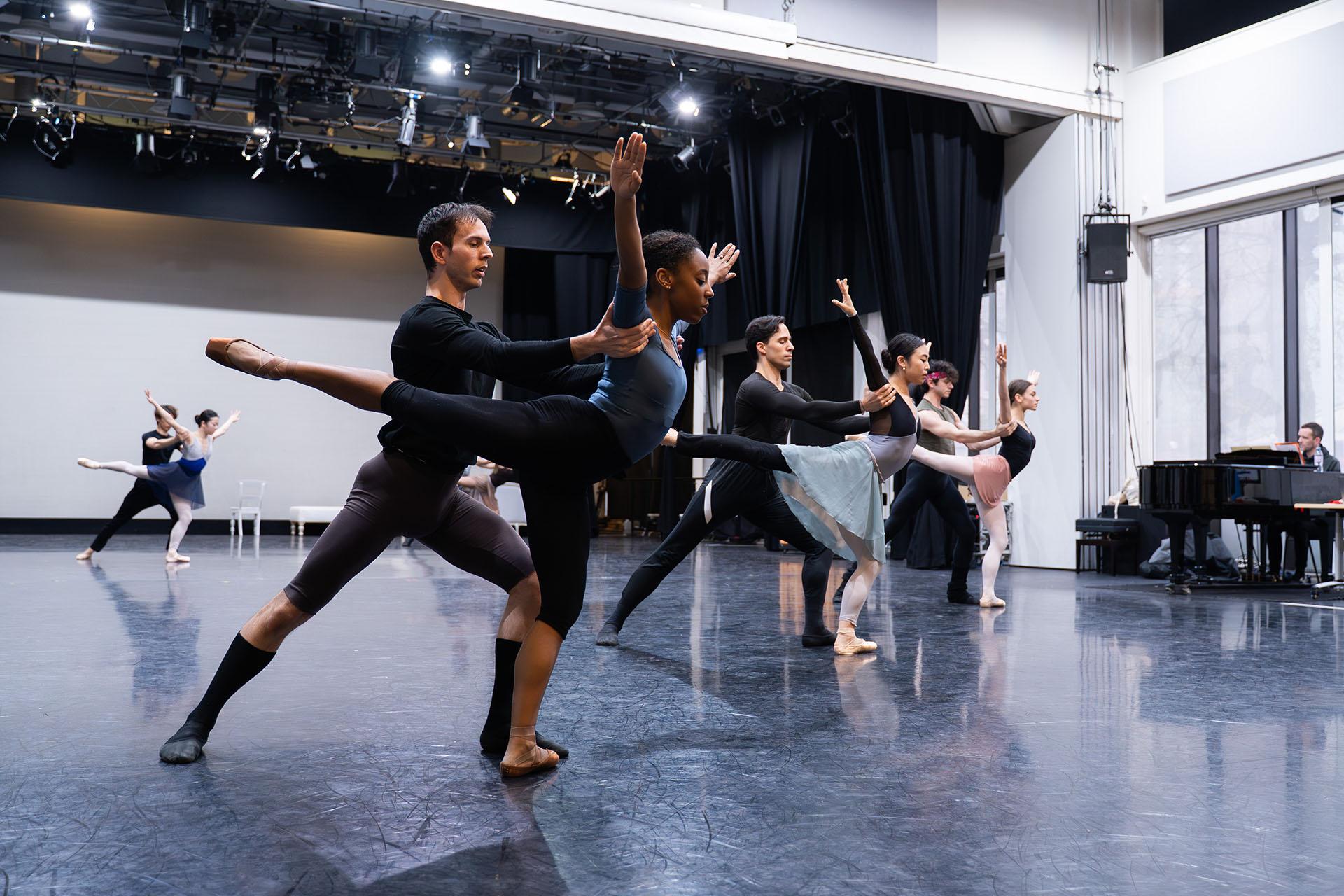
Rehearsals of Agagio Hammerklavier with Kirica Takahashi, Nida Aydınoğlu, Miguel Teixeira and other Northern Ballet dancers. Photos by Emily Nuttall.
In the opening section and the subsequent short pieces for the six soloists, it is evident how much the dancers have to move as one and almost breathe together. Each group section is followed by a duet for one of the couples. The first is tender, although the woman does regularly try to escape the man. Here, the movement idiom is downwards and grounded, whereas the second dynamic duet seems about to take flight, with snappy extensions and high lifts. The tangible unrest of these two duets makes way in the third pas de deux for harmony and submission. In breathtaking slow motion, the deceleration reaches its absolute peak here.
-
Music by Ludwig van Beethoven
-
Piano Sonata No. 29, Op. 106 III. Adagio sostenuto
-
Performed live by:
-
Colin Scott - Piano
-
Set design by
-
Jean Paul Vroom
-
Lighting design by
-
Jan Hofstra
-
Lighting revival by
-
Bert Dalhuysen
-
Restaged by
-
Larisa Lezhnina & Rachel Beaujean
-
Costume design by
-
Jean Paul Vroom
-
Costumes provided by
-
English National Ballet
Running time 25 minutes
Three Short Ballets (Spring 2026)
Three choreographers. Three distinctive works. One extraordinary evening of ballet.
Read more
Winter Dances
Winter Dances tells the brief story of a group of young people on an evening of leisure, with the melody of the music guiding their interactions.
Read more
Intimate Pages
"When I listen to the music I hear so many emotions. Yearning, ecstasy, struggle, elation." - Tiler Peck
Read more